
Concrete · May 2, 2026 · 6 min read
How Freeze-Thaw Cycles Destroy Cheap Concrete — and How to Make Yours Last 30 Years
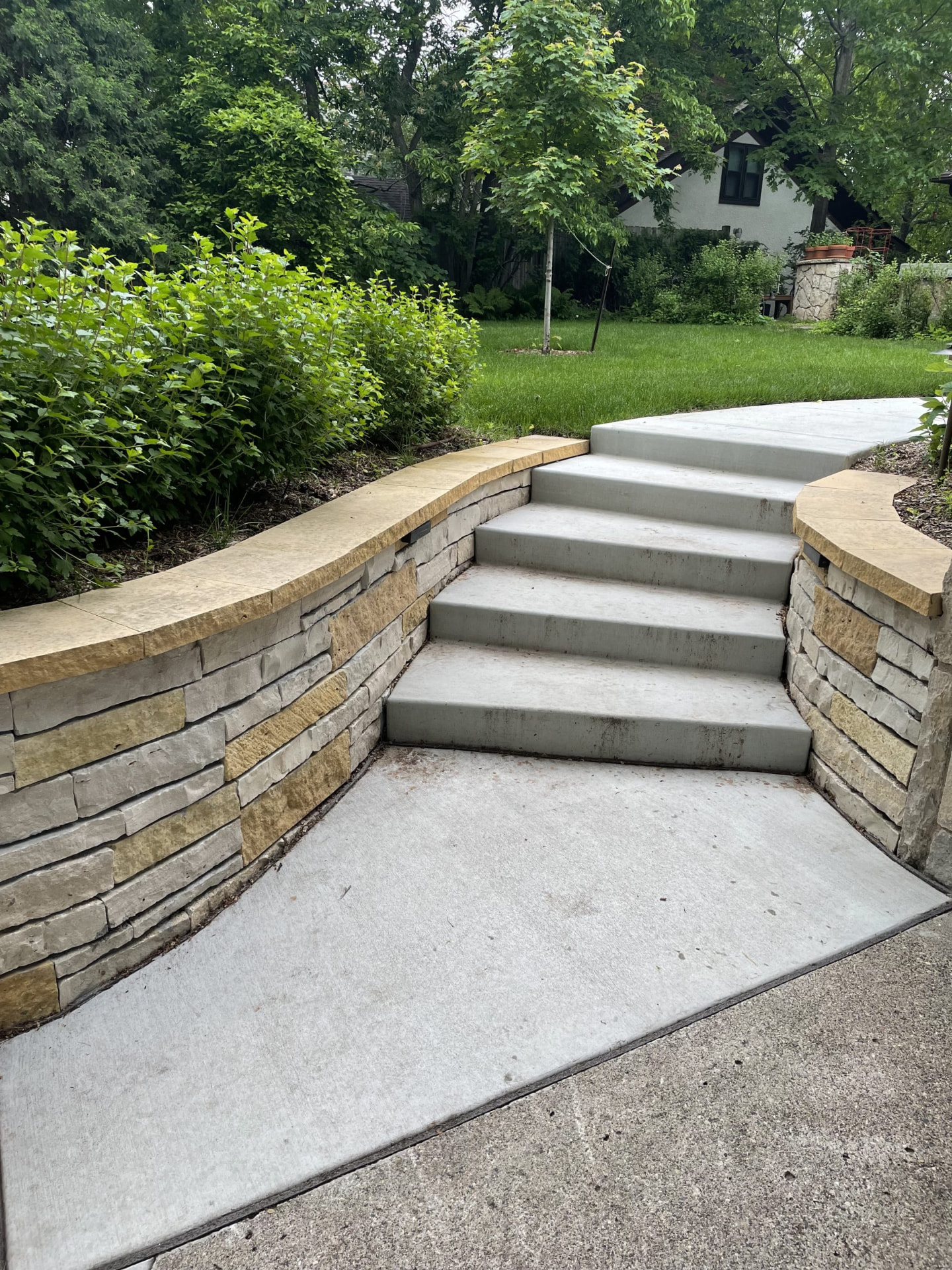
Drive down any Twin Cities street and you can date the concrete by looking at it. Some driveways are flaking apart at seven years. Others, poured in the 1980s, are still tight and flat. Same climate, same salt, same plows. The difference is almost never luck.
What freeze-thaw actually does
Concrete is porous. Water finds its way into those pores from rain, snowmelt and slush dragged in off the road. When the temperature drops below freezing, that water expands roughly nine percent. Inside a confined pore, that expansion generates enormous internal pressure. Thaw, refill, refreeze — and the surface begins to fail from the inside out.
The Twin Cities see dozens of these cycles every year, concentrated in the shoulder seasons when daytime temps swing above freezing and nights drop back below. That's the punishing part: it isn't the deep January cold that kills concrete, it's the March seesaw.
The three failure modes you'll see
- Scaling: the top layer flakes off in thin sheets, exposing sand and aggregate. Usually a curing, finishing or de-icer problem.
- Spalling: deeper chunks pop out, often at edges and joints. Water plus salt plus, sometimes, corroding reinforcement.
- Heaving and cracking: whole sections lift or split because water is trapped in the base and freezing beneath the slab.
The four things that make concrete last 30 years
1. A base that drains
This is the part nobody sees and the part that decides everything. Concrete placed on undisturbed clay or poorly compacted fill will move. We excavate to depth, install a granular base such as Class 5, and compact it in lifts with a plate compactor or roller. A free-draining, compacted base gives meltwater somewhere to go instead of freezing under your slab and lifting it.
2. Air-entrained mix, low water content
Air entrainment introduces microscopic air bubbles throughout the mix. When water inside the concrete freezes and expands, those bubbles act as pressure relief chambers. It's the single most important mix specification for northern climates, and it's non-negotiable on any exterior pour we place.
Equally important: not adding water on site to make the mud easier to finish. Every extra gallon raises the water-to-cement ratio, increases porosity and lowers strength. A crew that waters down the mix for their own convenience is trading your driveway's lifespan for a shorter workday.
3. Joints cut correctly, early
All concrete shrinks as it cures, so it will crack somewhere. Control joints decide where. They need to be cut roughly a quarter of the slab depth, spaced in panels that stay close to square, and cut within the correct window after finishing. Skipped, shallow or badly spaced joints are the reason so many driveways have random diagonal cracks by year three.
4. Curing and sealing
Concrete doesn't dry — it cures through a chemical reaction that needs moisture and time. Proper curing in the first week builds a dense, durable surface that resists water penetration. After that, a quality penetrating sealer applied the first season and refreshed every two to three years keeps chlorides out of the paste.
What you can do as the owner
- No de-icing salt at all during the first winter — use sand for traction.
- After that, prefer a calcium magnesium acetate blend over rock salt.
- Keep downspouts and grading directing water away from slab edges.
- Reseal on schedule; it's the cheapest maintenance in the entire yard.
- Fix small cracks and open joints before winter so water can't get in and widen them.
None of this is exotic. It's just the difference between a crew doing the job the way Minnesota requires and a crew doing it the fast way. We've been placing concrete here since 1976, and we've fixed enough of the fast way to know what it costs.
Have a slab that's starting to scale, or planning a new pour? Call 952-835-0343 for a free estimate anywhere in Bloomington and the Twin Cities metro.